
Guiding community-led habitat restoration efforts
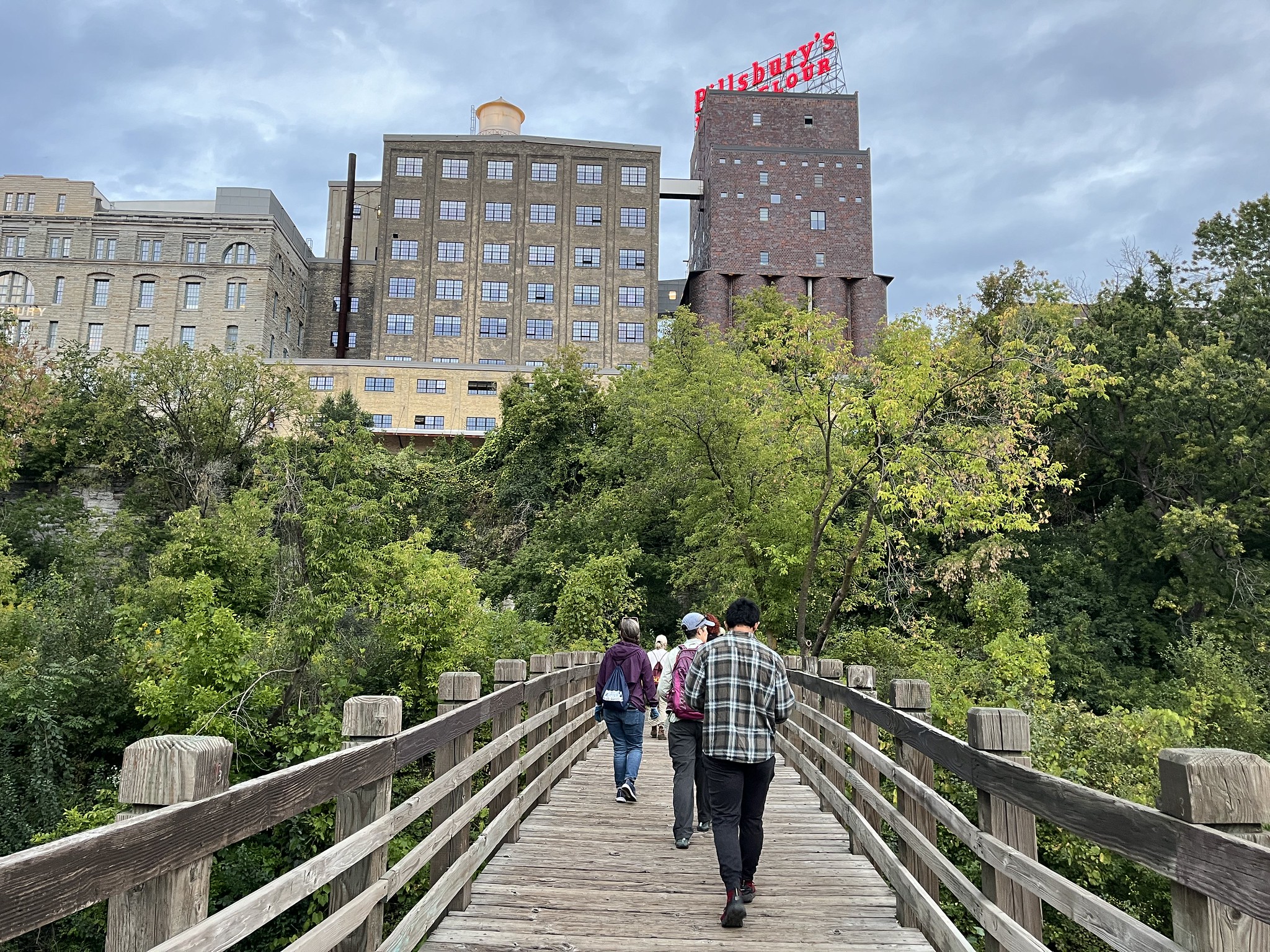
Volunteer-centric management plans provide a new stewardship model for parks beloved by committed neighbors: FMR provides technical guidance, but neighbors lead.
Friends of the Mississippi River supports local groups and communities in stewarding the places they know and love by working with them to create volunteer-centered management plans.
An ardent commitment to a chosen natural area is crucial to lasting change on the landscape and in communities, as people become connected to the land and to each other. Restoration fosters resilience and a sense of belonging — strengthening both the natural world and those who care for it.
By creating specialized management plans, we equip the community with guidance to care for open spaces, enabling conservation on a much larger scale.
Community-driven restoration
Over the last several years, a handful of neighborhood groups in Minneapolis reached out to work with them to protect and improve a natural space near and dear to them.
Our initial engagement with these groups includes setting goals and ensuring that everyone who should be is at the decision-making table. Once we've gathered insights and input, we evaluate the site with an eye toward the most important restoration needs and manageable tasks for a community group.
We create these plans by outlining straightforward, seasonal tasks small groups can complete in a few hours over the course of 5-10 years. We also identify work best suited to professionals employed by the land manager.
As with other management plans, the goal is for ecological conditions to improve over time and for the park to become more self-sustaining, requiring only a small amount of yearly tending to maintain a healthy, balanced landscape. FMR remains a resource for engaged neighbors, providing guidance as restoration progresses and organizing larger volunteer events to support bigger projects.
Where we've partnered on volunteer-centric management planning
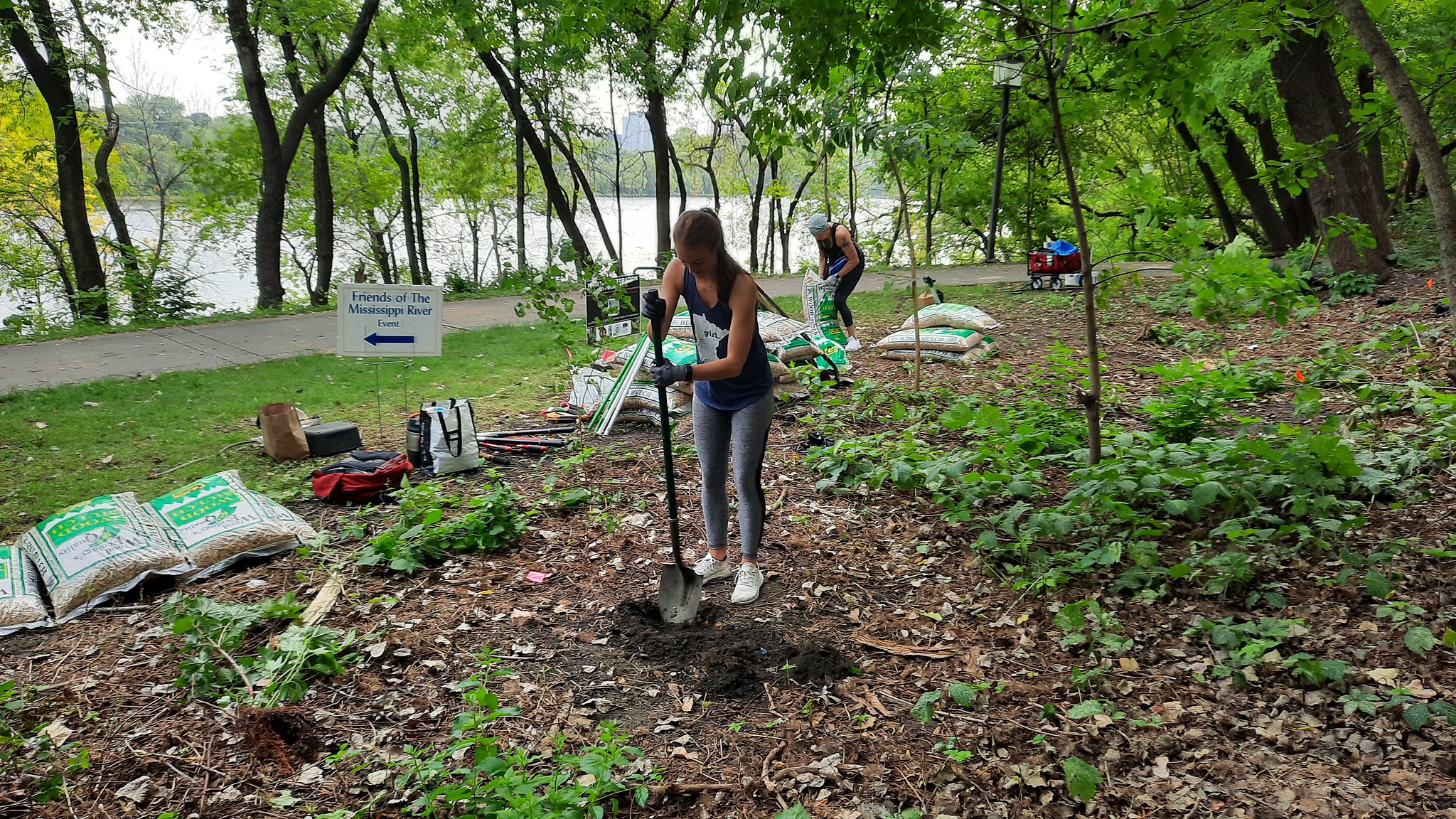
James Rice Park stretches along West River Parkway (also known as James Rice Parkway), south of the Plymouth Avenue bridge and north of the Hennepin Avenue bridge within the North Loop neighborhood of Minneapolis. The park contains a variety of walking and biking paths, benches, parking, a playground and 6.25 acres of mostly forested riverside natural areas.
James I. Rice Park, Minneapolis
James I. Rice Park along the Mississippi in the North Loop neighborhood of Minneapolis is among the smaller parks in the Minneapolis Park and Recreation Board system, but its size doesn't diminish its value to the community. Over time, however, a beloved place can start to show wear.
In 2019, the North Loop Neighborhood Association recognized some issues and took action. With modest local funding, community volunteers organized workdays to restore the park's ecological health. Park board staff identified a need for a thoughtful planning process and technical knowledge to guide the volunteers' efforts. Through a long-standing partnership between the park board and FMR, park board staff engaged FMR ecologists to assist the neighborhood association with restoration efforts.
In 2021, the Mississippi Watershed Management Organization awarded a planning grant to FMR, allowing us to document the park's historical and current conditions, hold engagement events and develop a volunteer-centric management plan.
James I. Rice Park's committed crew of volunteers, with growing restoration expertise, has been following this plan and making great strides in improving the park's ecological health and resilience.
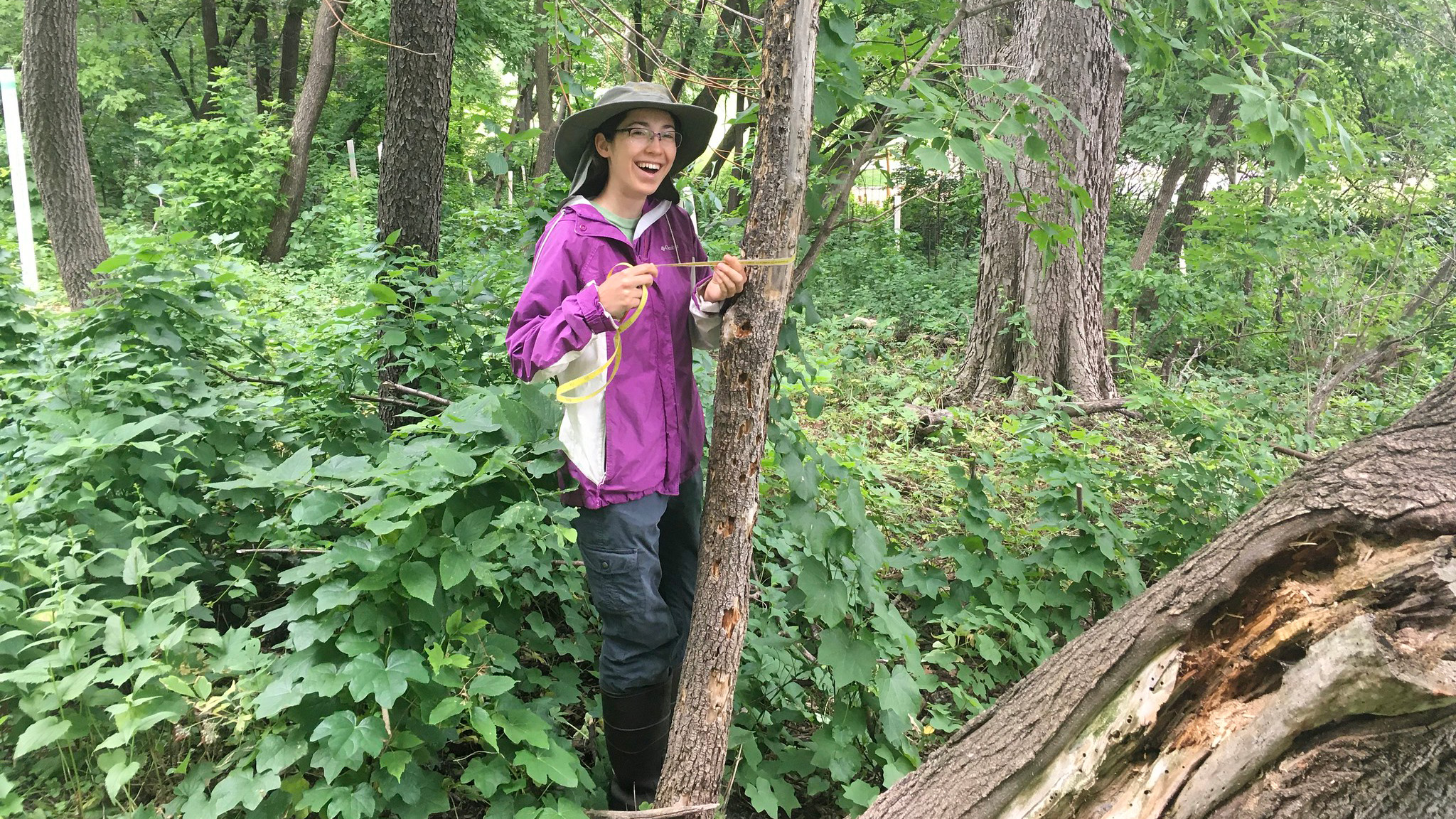
Bassett's Creek Park straddles the creek in Minneapolis' Bryn Mawr and Harrison neighborhoods. The park's 10-acre natural area, in the southwest corner, contains a variety of walking paths, benches and a hilltop with a stunning view of downtown. Over half a mile of the creek flows through this mostly forested oasis.
Bassett's Creek Park, Minneapolis
A few miles west of downtown Minneapolis, another group of dedicated volunteers was working around the same time to restore the woodlands and streambanks at Bassett's Creek Park. This neighborhood park had become degraded by invasive species, and the lack of understory plants was causing erosion on the slopes above Bassett's Creek.
Friends of Bassett's Creek, volunteers organized by the Bryn Mawr Neighborhood Association, led early restoration efforts, including removing the buckthorn shrub layer. Minneapolis Park and Recreation Board supplied native trees and shrubs, which volunteers planted and cared for to provide better habitat and stabilize bare soil.
Restoration on this scale is often undertaken by paid professionals, and the hard-working volunteers at Bassett's Creek Park needed support in prioritizing work and developing a phasing plan that would allow for necessary follow-up management.
With support from the Bassett Creek Watershed Management Commission and the Bryn Mawr Neighborhood Association, FMR led a community engagement process to develop an understanding of needs and priorities. We also worked closely with the volunteers who had gotten an early start on the restoration, making sure our recommendations aligned with their progress and future capacity.
We delivered the Bassett's Creek Park Natural Resources Management Plan in late 2022, and since then, volunteers have steadily taken on tasks to restore the park to better ecological health. At only 9 acres, the park may be small, but its location between Theodore Wirth Park and the Mississippi creates a vital link or partial habitat corridor for wildlife.
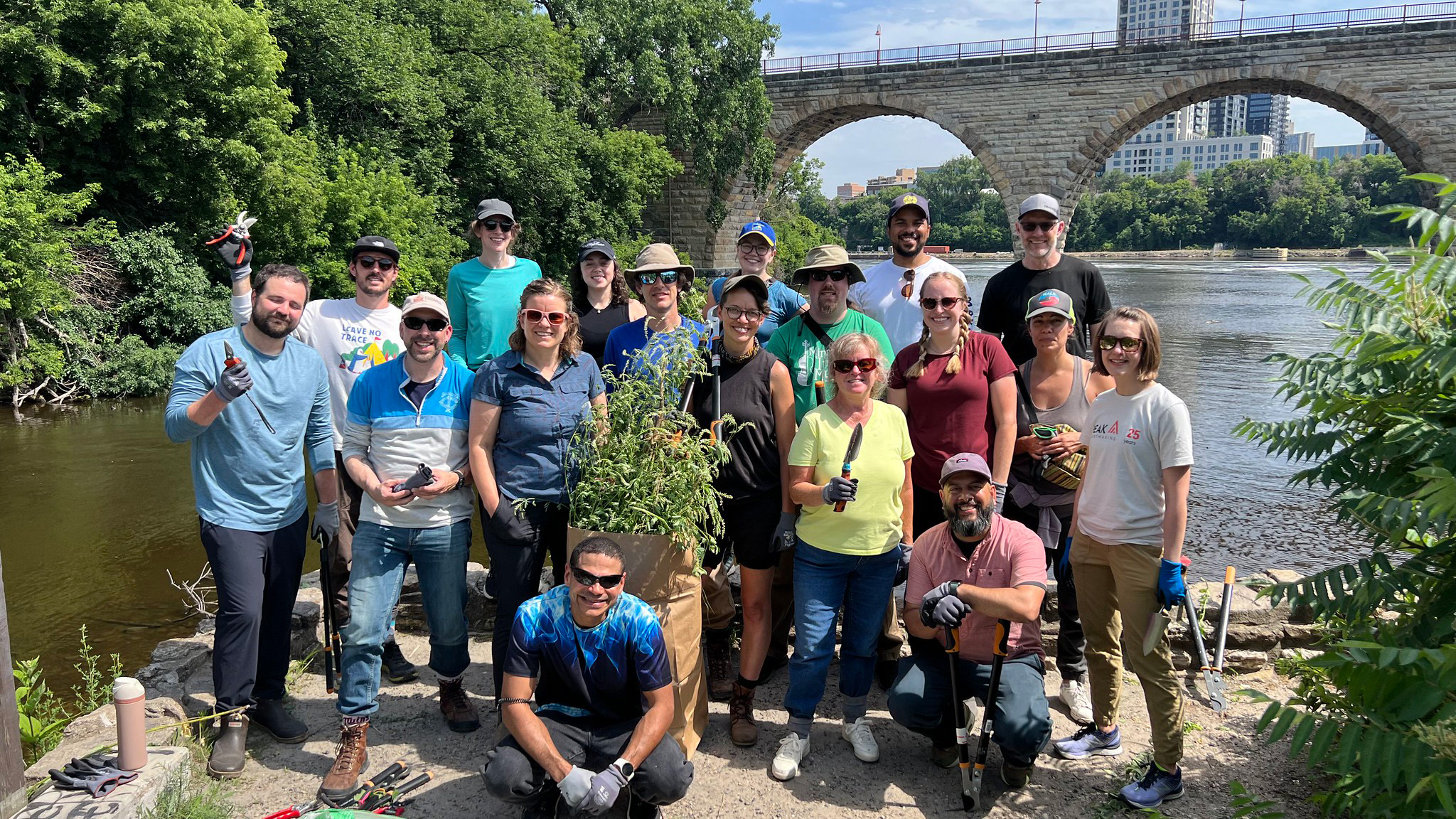
Hidden along the east bank of the Mississippi River, below the bustling St. Anthony Main corridor and the Stone Arch Bridge, sits Father Hennepin Bluff Park. Often described as an oasis in the heart of the city, the natural areas at the park sit below the bluffline, with the park’s main amenities housed atop the bluff. The natural area boasts trails and access to the water, and affords beautiful views of the river, the downtown skyline, and many birds and other wildlife.
Father Hennepin Bluff Park, Minneapolis
This 6-acre natural area nestled under the bluffs below St. Anthony Falls provides a riverside respite for both people and wildlife near downtown Minneapolis. The Father Hennepin Park stewards, a volunteer program of the Marcy Holmes Neighborhood Association, has long been taking care of this space. The group hosts volunteer events to remove invasive plants and maintain the trails, but wanted more long-term direction for their work.
In 2024, FMR created a plan for the group, laying out a 10-year path to restoration at the complex and diverse site. The plan included both public feedback and feedback from the Dakota community, led by Full Circle Indigenous Planning and Design.
Since 2024, the park stewards group has invested hundreds of hours in implementing the plan, and FMR has helped bring additional volunteer groups to assist with their work.
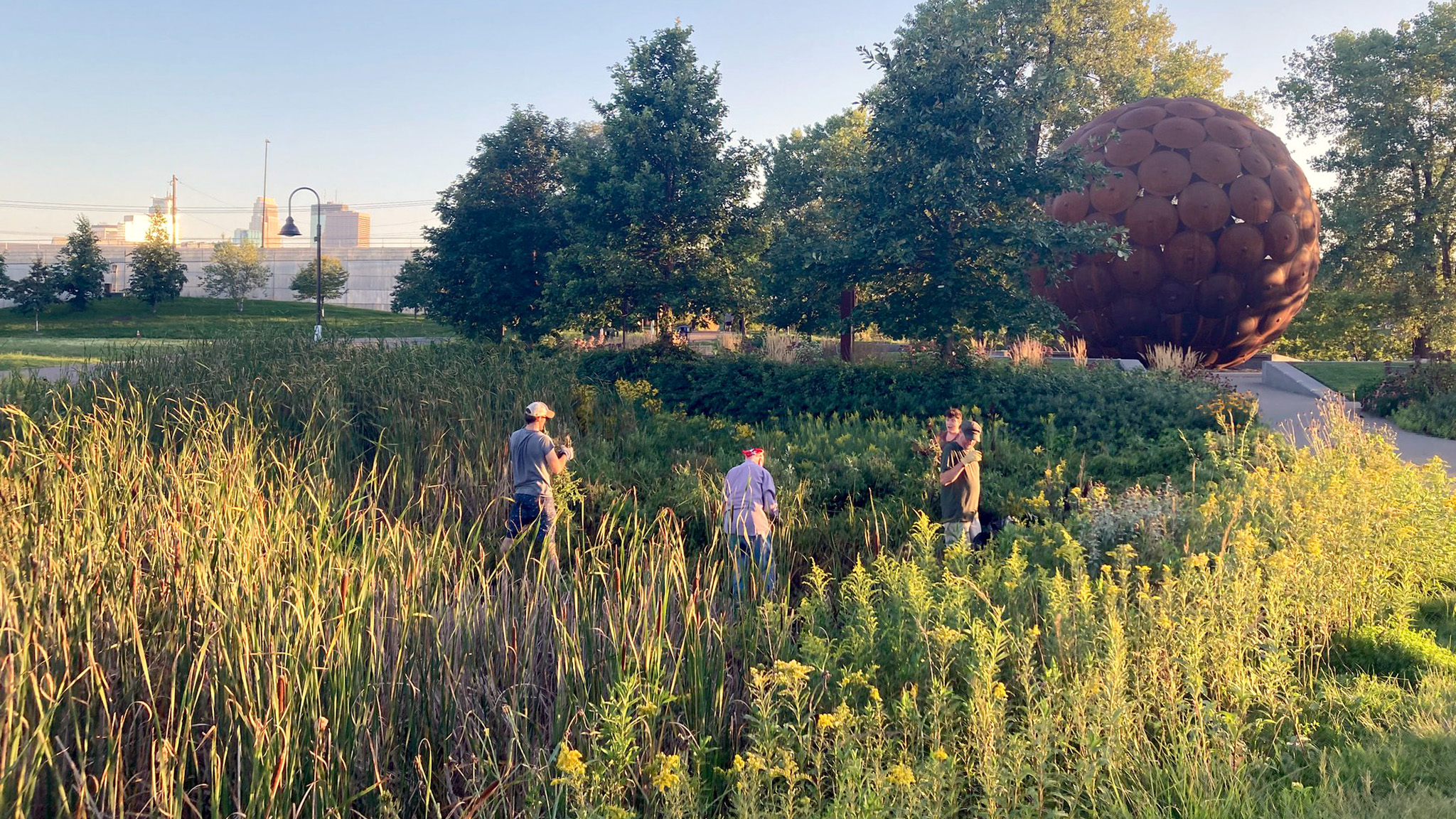
Located along the east bank of the Mississippi River just north of the Broadway Avenue bridge, Sheridan Memorial Park is home to a veterans memorial, an FMR-installed raingarden and a multi-year community restoration partnership with the Sheridan Neighborhood Organization.
Sheridan Memorial Park, Minneapolis
At this site, a stretch of land on the river’s east side — between the Broadway Avenue bridge and the BNSF railroad bridge to the north — had long gone unmanaged. The riverbank was plagued by invasive plants, trash and other debris, and erosion issues. Owned by the Minneapolis Park and Recreation Board and part of Sheridan Memorial Park, this 1.5-acre natural area wasn’t managed until the Sheridan Neighborhood Organization took an interest. Driven by a neighborhood goal to add more native plants and expand local volunteer opportunities, the group reached out to FMR to explore a partnership.
Since this was a new initiative for the neighborhood, rather than forging ahead with a plan, we wanted to assess their interest in and capacity for a new type of stewardship event. Thanks to a Community Grant from the Mississippi Watershed Management Organization, we were able to design an event series to test the waters.
What started as a year-long effort to tend a raingarden that FMR had helped plant at the park in 2014 blossomed into an approved plan in 2025. Mississippi Watershed Management Organization funded the creation of the document, which included robust in-person and online community input and feedback, through their Planning Grant program. In 2026, volunteers began implementing the plan in earnest.
Restore habitat near you
While FMR's restoration work occurs mostly on larger parcels of public land, we've written about the power of small-scale restoration, even focusing on spaces the size of a backyard. We encourage anyone who can to restore their yards with an eye toward native species and water quality. But if you're hoping to tackle something bigger, like a natural area in your neighborhood, consider approaching the municipal landowner to discuss its potential for restoration.
And if you live near one of the sites mentioned in this article, check your local neighborhood organization's website or social media for more information about how to volunteer.
Friends of the Mississippi River also hosts dozens of habitat restoration volunteer events each year at 40+ sites across the metro. Join us!